The Future of Villa Investment in 2026: ROI Guide for Eden Park Compound
The regional and local real estate market is undergoing economic and investment conditions that require conscious investors to rethink their investment toolkits. Purchasing property is no longer merely a step to shield liquidity against inflation; it has transformed into a strategic calculation aimed at securing the highest Return on Investment (ROI) and optimal resale liquidity.
In this comprehensive analytical guide, we provide data driven insights and financial formulas regarding the future of villa real estate investments in 2026 and beyond. This includes a precise structural comparison between standalone villas and villas within gated communities, alongside a practical review of successful models in West Cairo, such as Eden Park Compound in the Green Belt.
Purchasing Power Shifts: Why Villas Define The Future of Villa Investment 2026
Investment behaviors in the real estate sector have experienced a fundamental shift. Financial data for 2026 indicates that villas are no longer categorized as slow growing luxury assets; instead, they have evolved into high-hedge financial assets against exchange rate fluctuations.
1. Scarcity vs. Supply Equation
Residential buildings and apartments offer a high number of units per square meter of land, whereas villas are subject to extremely low footprint ratios typically not exceeding 15% to 20% of the total project area. This inherent scarcity ensures that demand consistently outpaces supply, maintaining a demand-driven market.
2. Land Equity Growth
When buying an apartment, you own a very small undivided share of the land. Conversely, when investing in a villa, the majority of the property’s value resides in the ownership of the underlying land. Historically, land values appreciate between 25% and 40% annually in urban expansion zones, making villas the premier vehicle for capital preservation in 2026.
Financial Analysis: Calculating Return on Investment (ROI) in Villas
To establish a clear scientific framework beyond speculation, real estate evaluation experts rely on a core formula to measure villa ROI:
Financial Performance Comparison Over 5 Years (2026–2031)
Structural Comparison: Standalone Villas vs. Gated Community Villas
Choosing between a standalone villa outside a compound and investing in a gated community villa is one of the most critical decisions an investor must evaluate before committing capital, especially given rising land prices, construction costs, and maintenance expenses in the 2026 Egyptian market. While both options offer real estate ownership and potential capital gains, investment dynamics, future overheads, and resale liquidity vary significantly.
Investing in Standalone Villas in 2026
Standalone villas offer owners greater privacy, independence, and the freedom to modify the building or external spaces in accordance with local regulations. They can be a suitable choice for buyers who prefer owning property in an established service-rich area without committing to compound maintenance or management fees.
From an investment perspective, however, the owner assumes full responsibility for routine maintenance of facades, gardens, internal infrastructure, plumbing, electricity, security, and cleaning. Furthermore, the quality of the surrounding environment depends heavily on municipal development in the broader neighborhood, which can impact the property’s attractiveness and resale value.
Key Challenges to Consider:
-
High individual maintenance costs, particularly with larger villa and garden footprints.
-
Liquidity risks, as finding a buyer may require a longer period.
-
Varying levels of security and public services from street to street.
-
Property value reliance on general area development rather than the asset alone.
-
Direct responsibility for managing all repairs and operational upkeep.
Standalone villas are generally best suited for end-users prioritizing maximum privacy and space, who possess the capacity to manage long-term operational costs.
Investing in Gated Community Villas in 2026
Villas within gated communities operate under an investment model managed by a specialized developer or facility management firm. This management covers road maintenance, green spaces, shared amenities, security, sanitation, and facility services.
This ecosystem provides an organized residential environment while preserving the project’s long-term appeal and asset value. Well-maintained green areas, cohesive architecture, and functioning infrastructure allow gated communities to consistently attract new buyers and tenants.
Key Investment Advantages:
-
Regular infrastructure and common-area maintenance without individual burdens.
-
Elevated security and controlled access compared to open neighborhoods.
-
Integrated amenities such as clubhouses, green parks, play zones, and commercial areas.
-
Stronger appeal to lifestyle buyers, boosting liquidity during resale.
-
Higher potential rental income due to location strength and actual rental demand.
-
Preservation of the overall community aesthetic, aiding long-term valuation.
However, purchasing inside a compound does not automatically guarantee returns. Investors must account for maintenance fees, developer reputation, occupancy rates, compound location, accessibility, service execution quality, and historical resale prices of similar units.
Which Option Suits Investors Best?
The optimal choice depends on investor priorities. If the primary goal is maximum independence, space, and personal customization, a standalone villa in a mature area may fit. If the objective is blending personal use with investment upside—while minimizing management burdens and maximizing rental yield and resale liquidity—a gated community villa offers a more structured route.
Decision-making should look beyond the initial purchase price to evaluate the Total Cost of Ownership (TCO), factoring in unit price, finishing, maintenance, service fees, expected rental yields, and exit liquidity.
Takeaway: In 2026, the optimal choice depends on location, project quality, entry price, land-to-building ratio, service levels, and maintenance fees rather than the label alone. Every project should be evaluated as an independent investment opportunity.
Key Operational Drivers for Compound Investments
1. Impact of Facility Management on Resale Value
Standalone villas often experience aesthetic and market value decline after 5 to 7 years due to deteriorating adjacent roads or uncoordinated facade/landscape maintenance. In contrast, gated communities utilize structured maintenance reserves and unified administration, ensuring infrastructure preservation and significantly boosting resale value and transaction speed.

2. Target Tenant Profile
Rental market analyses for 2026 reveal that high-yield tenant segments (expatriates, diplomats, senior executives) predominantly avoid unsecured standalone villas without smart access controls. Investing in a gated compound secures access to high tier tenant demand, often paying premium or currency indexed rates.
Investment Geography: Why Is the Green Belt in Sheikh Zayed Attracting Capital?
Location remains the central pillar of real estate value. West Cairo specifically Sheikh Zayed and its connected expansions—represents the region’s most dynamic growth node.
1. Strategic Location & Connectivity
The Green Belt in Sheikh Zayed directly connects to major arteries, including the 26th of July Corridor, the Middle Ring Road, and the Dahshur Link. This infrastructure network reduces travel times to central Cairo and key service hubs, elevating the underlying asset value for villas in the Green Belt.
2. Low Density & Value Retention
Urban planning frameworks in the Green Belt enforce low footprint ratios and restricted building heights (Ground + 1 Floor). This preserves the area’s low density luxury profile, preventing market saturation and protecting long term capital values.
Applied Case: How Eden Park Compound Exemplifies Successful Real Estate Standards
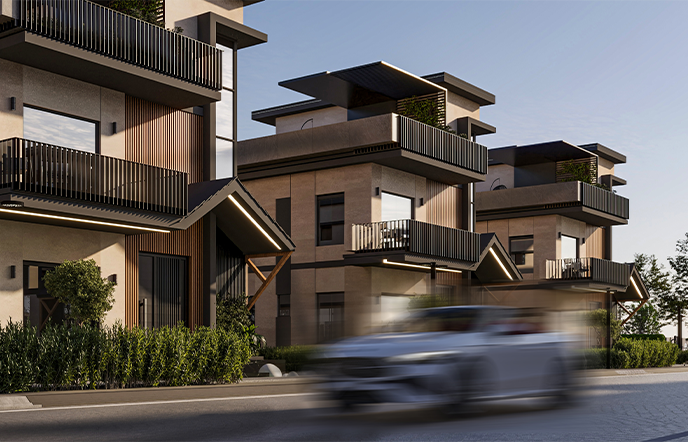
Applying these financial and planning criteria to current market offerings highlights Eden Park Compound in Sheikh Zayed’s Green Belt as a practical reference for 2026 villa investments.
-
Privacy & Architectural Design: The project prioritizes efficient floor plans, optimal interior space utilization, and sustainable urban design to ensure privacy.
-
Pricing & Capital Equity: Eden Park offers competitive entry pricing relative to regional averages, providing investors with a built in capital appreciation margin upon handover.
-
Future Market Value: Positioned within the core of the Green Belt, the project directly benefits from surrounding infrastructure expansion, supporting future rental yields and providing a clear exit strategy for resale profitability.
Frequently Asked Questions (FAQ)
Q1: Is investing in villas better than apartments in 2026?
A: Villa investments offer stronger capital protection due to higher land equity ownership, which historically appreciates 25% to 40% annually. Compound villas in prime expansion zones like Sheikh Zayed frequently outpace apartment capital growth by 8% to 12%.
Q2: What is the expected rental yield for villas in Sheikh Zayed?
A: The average annual rental yield for gated community villas in Sheikh Zayed and the Green Belt ranges from 7.5% to 9.5%. Furnished properties targeting corporate executives, expatriates, or diplomats can reach yields up to 11%.
Q3: How does facility management affect villa resale value?
A: Continuous facility and landscape management prevents physical depreciation. This preserves market appeal and can increase resale values by up to 30% compared to standalone villas subject to surrounding urban degradation.
Q4: Why is the Green Belt in Sheikh Zayed a prime destination for villa investment in 2026?
A: The Green Belt combines low building density (15%–20%) with direct connectivity to the 26th of July Corridor and the Middle Ring Road, supporting steady capital appreciation and sustained demand.
Q5: What is the expected resale timeframe (liquidity) for a gated community villa?
A: Reselling a villa within a secured compound typically takes 2 to 4 months due to strong demand for managed communities, compared to 9 to 14 months for standalone units outside compounds.
Q6: What is the most critical financial metric when buying a villa for investment rather than personal use?
A: The most critical metrics are the competitive entry price and the land to building ratio. Purchasing during early development phases in low-density projects yields the highest Total ROI upon handover or resale.
Q7: How do compound villas protect owners against inflation?
A: Villas function as high-hedge, inflation proof assets because their underlying value is driven by land scarcity and raw material costs. Consequently, their capital appreciation generally exceeds annual inflation rates.
Q8: Are medium or large villa layouts more profitable for resale?
A: Medium-sized, efficiently planned layouts (townhouses, twin houses, and standalone smart layouts) record faster resale liquidity and higher rental yields relative to capital cost compared to ultra-large mansions.
Q9: What is the difference in depreciation rates between standalone and compound villas?
A: Standalone villas depreciate faster due to uncoordinated exterior maintenance and variable surrounding infrastructure. Compound villas maintain lower depreciation rates due to centralized maintenance reserves, security, and regular upkeep.
Q10: How does purchasing in a project like Eden Park Compound secure investment value?
A: Eden Park offers a competitive entry price point combined with low density architectural layouts. This structure gives buyers a higher capital growth margin as regional infrastructure and nearby commercial corridors mature.
Conclusion
Analyzing the future of villa real estate investments demonstrates that successful decisions in 2026 depend on three core elements: strategic location, a secured managed community, and an advantageous entry price.
Villas within gated communities in Sheikh Zayed’s Green Belt represent a strategic option for investors looking to protect capital while aiming for solid medium to long term returns.
Looking to explore real estate opportunities in Sheikh Zayed?
Contact our advisory team today to review available floor plans, payment schedules, and updated villa pricing at Eden Park Compound to align with your investment portfolio.




لا تعليق